Intelligent HarvestThe Matchlight Group
Research brief
A venture research project · 2026

From heat sink
to harvest.

Powers the cloud. Feeds the town.

Capturing the low-grade waste heat from AI data centers to grow local food — and earn the community permission that a stalled $156 billion of projects now lacks.

Scroll to begin
The thesis

The product is permission, not produce.

The scarce resource in the AI build-out has quietly changed. It is no longer money, chips, land, or even power. It is community permission.

And the most credible instrument yet found for manufacturing it is also the most literal: capture the waste heat a data center is already throwing away, and grow food with it — next door, for the people whose consent the project requires.

01 · The Problem

Permission is the new bottleneck.

The industry has effectively unlimited capital and a rapidly vanishing license to build. Opposition has become the rate-limiting step — measurable in the hundreds of billions.

$156BU.S. data-center projects blocked or stalled by local opposition in 2025
188organized opposition groups now active across 40 states
69→35%Virginians comfortable with a nearby data center, 2023→2026
20+projects killed in a single quarter (Q1 2026) — a record

Read closely, the public is not saying “no.” It is saying not like this. The costs of a data center are local and concrete; the benefits are diffuse and distant. People are not refusing the digital economy — they are refusing a bargain in which they absorb the costs and someone else collects the benefits.

02 · The Solution

Give the heat a second destination.

A large data center is a furnace that happens to compute. Nearly all the electricity it draws leaves as heat. Today that heat is vented to the sky. We give a fraction of it a second destination — without changing the first.

SERVER HALL DATA CENTER cooling loop untouched HEAT EXCHANGER BUFFER stores heat 24/7 GREENHOUSE year-round local food + jobs Hot supply — captured waste heat Cooled return — data-center loop intact
A side cutaway of the complex: the data center’s waste heat is captured, buffered, and piped to an adjacent greenhouse, while its own cooling loop runs untouched. It works whether the servers are liquid- or air-cooled, and an optional heat pump lifts the grade only when needed.
The unglamorous half of the system: a working greenhouse, plumbed to a data center it will never interrupt.
Intelligent Harvest
03 · The Proof

It already works — on four continents.

Data-center heat warms greenhouses, homes, and fish farms today. Abroad it isn’t experimental — it’s infrastructure. And a U.S. wave is now converging on exactly this model.

Boden, Sweden
Hive Digital · operating

A 32 MW data center heats a ~90,000 sq ft greenhouse, growing vegetables near the Arctic Circle.

Odense, Denmark
Meta · operating

A hyperscale facility feeds recovered heat into the municipal district-heating network.

Marietta, Ohio
SAIHEAT · operating

Liquid-cooled compute already heating a local community greenhouse — the exact pattern, on U.S. soil.

Mason County, WV
Fidelis · proposed

A campus pairing up to 1,000 MW of compute with controlled-environment agriculture and captured CO₂.

When multiple independent teams arrive at the same design, that is not coincidence — it is convergence on what the constraints allow. The open question is no longer whether it works, but who executes it cleanly, at community scale.

The part the public can taste

Four zones, one heat loop.

High-value crops that thrive on steady, low-grade warmth — turning an invisible by-product into something a resident can see from the road and buy at the market.

N DATA CENTER cooling self-contained HEAT EXCHANGER BUFFER ZONE 01 Strawberries ZONE 02 Ginger & turmeric ZONE 03 Mushrooms ZONE 04 Citrus PACKING + MARKET HALL where the town buys the harvest PARKING ENTRY 050100 m Greenhouse glazing Hot supply Cooled return
Site plan of the complex: four gutter-connected greenhouse zones fed from a shared heat exchanger and buffer, with a packing-and-market hall where the town buys the harvest. Illustrative layout, not to scale.
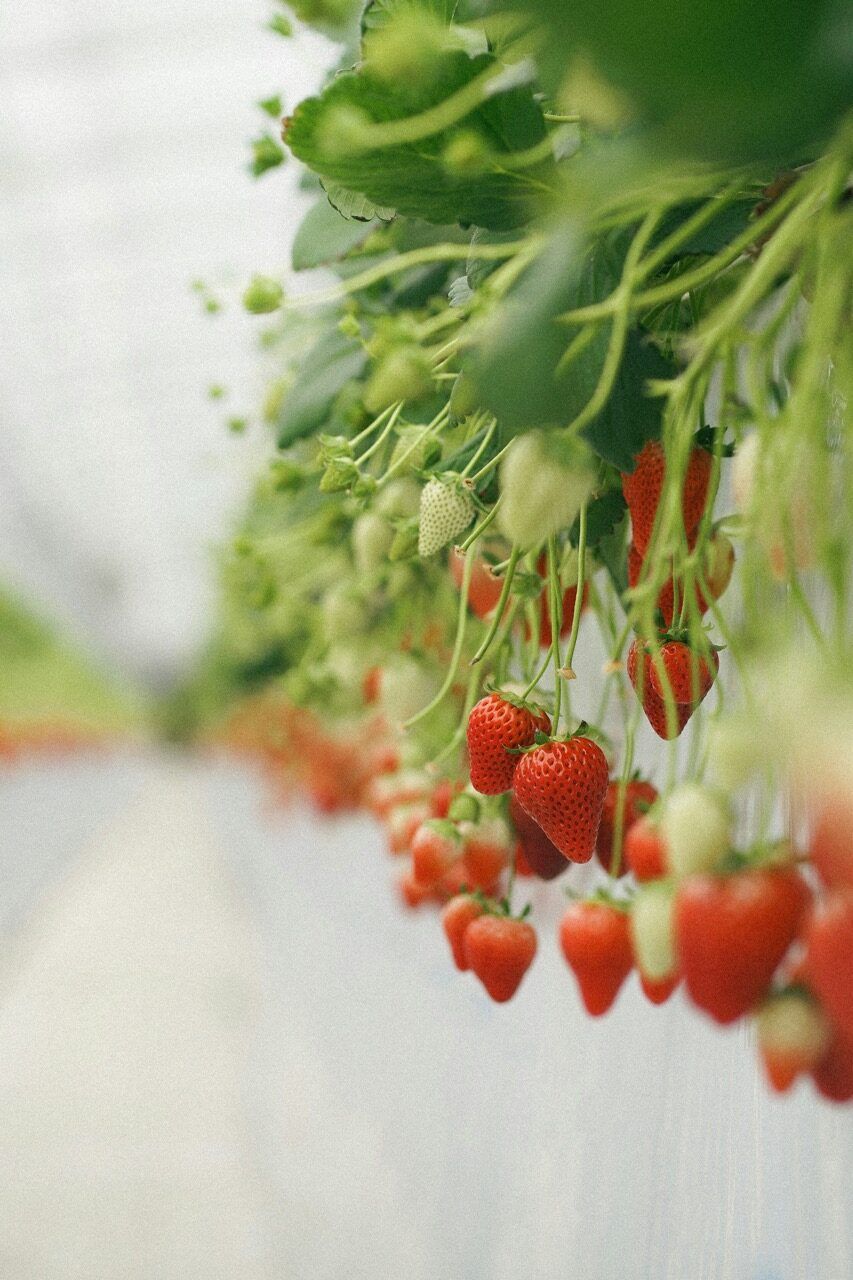
Strawberries
Zone 01
Strawberries
Ginger and turmeric
Zone 02
Ginger & turmeric
Gourmet mushrooms
Zone 03
Gourmet mushrooms
Citrus orangery
Zone 04
Citrus orangery
04 · The Product

One loop. Four objections answered.

The greenhouse is a flywheel for manufacturing consent. Captured heat grows food and jobs; those create a visible local benefit; benefit earns trust; trust becomes permission; permission lets more compute get built — which produces more heat.

Waste heat Food + jobsvisible benefit Trust Permission More compute — and the cycle compounds —
The permission flywheel. Each revolution lowers the resistance to the next — which is what separates a flywheel from a one-time favor.
01 · WATER

The fight that mobilizes opposition

The move to liquid cooling cuts data-center water use 31–52% — and that same closed loop is what makes the heat capturable.

02 · GRID

New load neighbors fear

Reuse can free feeder headroom, helping a project plug in — the heat it gives away helps it connect.

03 · JOBS

A server hall employs almost no one

A working greenhouse is the opposite asset: labor-intensive, year-round, and rooted in place.

04 · TRUST

Promises don’t carry a hearing

A building residents can walk into — with food they can taste — does. Verifiable, third-party-metered benefit, on the record.

05 · The Money

It’s a farm. And America bets on the farmer.

The greenhouse is not the asset — the permit is. So we price it like insurance, not like a farm that has to turn a profit. Funded the way America has always funded farms: a blend of public and private capital, much of it already enacted.

A data-center operator facing a project local opposition has stalled to a halt buys a few percent of permission insurance against an asset worth orders of magnitude more. The easiest math in the room — because even in the worst year, the downside is a sliver.

Greenhouse’s entire annual cost vs. the profit one approval protects the asset a single “yes” unlocks Facility annual operating profit — illustrative baseline (= 100%) ≤ ~2% — the entire greenhouse downside worst case: a total crop failure, ~$2.5M  (design target)
Even a total crop failure costs roughly two percent of the facility’s annual operating profit — and in every case the data center still gets built. Greenhouse figures are Intelligent Harvest design targets; facility profit is an illustrative baseline shown only as a ratio.

There is no branch where the operator regrets it. Worst case, a sliver of a loss against a sea of profit — and they built the thing that was blocked, employed the town, and stopped being the bully in the room. They walk into the hearing as an extraction story and walk out as a farmer for their own community.

Andrew Potter, Founder
A note on intent

We lead with honesty — because the model only works if it’s true.

The data center’s cooling is never touched. The heat pump is an occasional helper, not the hero. Every external number is checkable against its source, and every internal projection is labeled as a target, not a finding. A venture whose central claim is verifiable benefit has to hold itself to the standard it asks of the industry. Build the trust, and the permission follows.

Andrew Potter
Founder, Intelligent Harvest · The Matchlight Group
The close
Powers the cloud.Feeds the town.

Both, or neither — and we intend to prove it can be both. The greenhouse is not a garnish on the data center. It is the reason the data center gets built.

Every external figure in this project is cited to its primary source in the research brief; all internal numbers are labeled as design targets.

Contact

Let’s talk about a site.

Whether you’re a developer with a stalled project, a locality weighing a data-center proposal, or a partner who wants in early — start here.

Or email directly: andrew@intelligentharvest.org

Message sent.

Thank you — we’ll be in touch shortly. For anything urgent, email andrew@intelligentharvest.org.